
Co-Immunoprecipitation (Co-IP)
Service Features
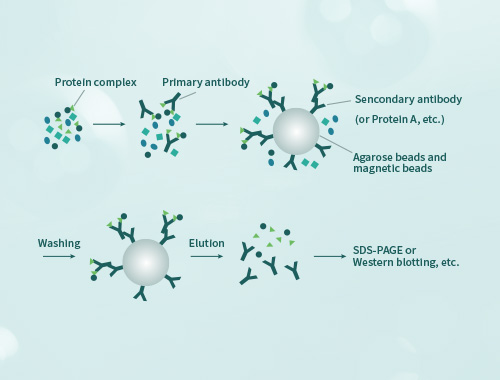
Co-IP enriches known protein complexes with antibodies to study in vivo protein interactions, an important approach for protein function and signaling pathway research.
Service Overview
Co-immunoprecipitation (Co-IP) is an effective method for studying in vivo protein interactions. An antibody binds a known protein to capture the intact protein complex, allowing identification of proteins interacting with the known protein. Combined with WB or mass spectrometry, it provides qualitative and quantitative analysis closer to the real intracellular environment.
Service Advantages
- Directly detects interactions between proteins and proteins, DNA, RNA, and other molecules, with qualitative and quantitative information.
- Performed under native conditions, closer to the intracellular environment.
- Studies multi-subunit or large protein complexes.
- Validation and functional studies can further confirm the biological relevance of the interaction.
Service Workflow
Order and sample intake
-
1
Lysate preparation and quantification
-
2
Incubation with sample, antibody, and Protein A/G beads
-
3
Precipitate collection, washing, and sample preparation
-
4
WB detection
-
5
Results delivery
The Co-IP service follows a 6-step workflow to ensure accurate, reliable results.
Customer Provides
1. Test samples and primary antibody (Proabbio can also provide the antibody).
2. Sample requirements:
Tissue: snap-freeze after collection, store at -80C, ship on dry ice;
Animal tissue: at least 400 mg;
Plant tissue: at least 2 g;
Cells: 2x10^7.
Ready to Start Your Project?
Our technical team can help with experimental design, sample evaluation and study execution. Contact us for a consultation or quote.
Talk to a Scientist